
Zero Waste definition: “The conservation of all resources by means of responsible production, consumption, reuse, and recovery of products, packaging, and materials without burning and with no discharges to land, water, or air that threaten the environment or human health.” www.zwia.org
Take Action
Zero Waste saves resources and habitat, provides jobs and reduces toxic chemicals and pollution including greenhouse gases. We can all do more. Learn what we do and what you can do to help…
Waste to Energy Webinars April 3 and 11 at 9 am PDT

Waste to energy is being sold as a solution to waste but learn more about the real impacts and better ways. Register for a webinar for environmental groups or one for local governments. More details here.
Why Zero Waste?
- Waste is a symptom of our overconsumption and wasteful use of resources.
- Other symptoms include climate change, habitat loss and degradation, pollution (air, water, land), soil nutrient loss, species overexploitation and extinctions, ocean acidification, human health risks, ecosystem collapse, inequity and injustice.
- Zero Waste saves resources and habitat, provides jobs and reduces toxic chemicals and pollution including greenhouse gases.
- Zero Waste can also save money, space and time.
- The Zero Waste philosophy fits well with the Doughnut Economics model of ensuring enough resources for people to thrive but not so much that we harm the planet. Watch this video for a description of a city level plan.
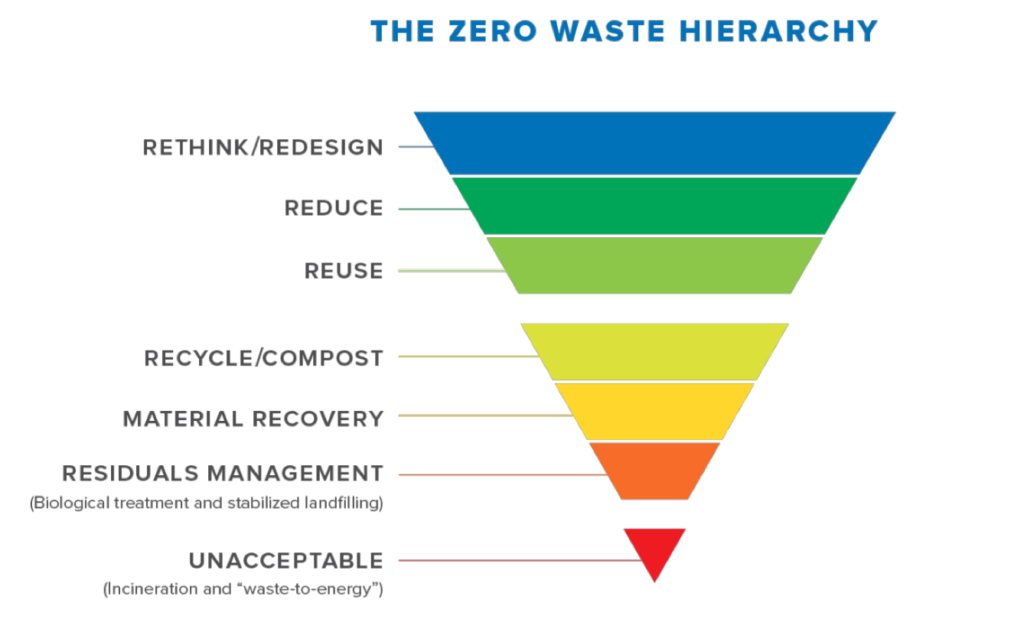
Zero Waste Hierarchy
Zero Waste BC supports the Zero Waste Hierarchy adopted by the Zero Waste International Alliance and Zero Waste Canada. More information on the guiding principles, definitions, and detailed levels for each step of the hierarchy can be found here.
This internationally accepted, peer-reviewed definition is important as others try to define it merely as no waste to landfill. Zero Waste is about reducing the throughput of materials to live more lightly on the land.
A Zero Waste Agenda for BC – Report ~ 2021
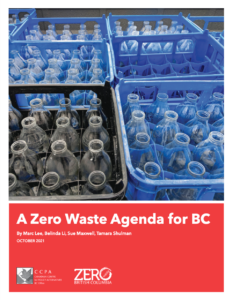
This report published October 2021 outlines what is needed to get to Zero Waste in BC along with the climate and job benefits of pursuing this approach. It is a collaboration with the Canadian Centre for Policy Alternatives as an update to the 2013 Closing the Loop report. A summary is also available here.